


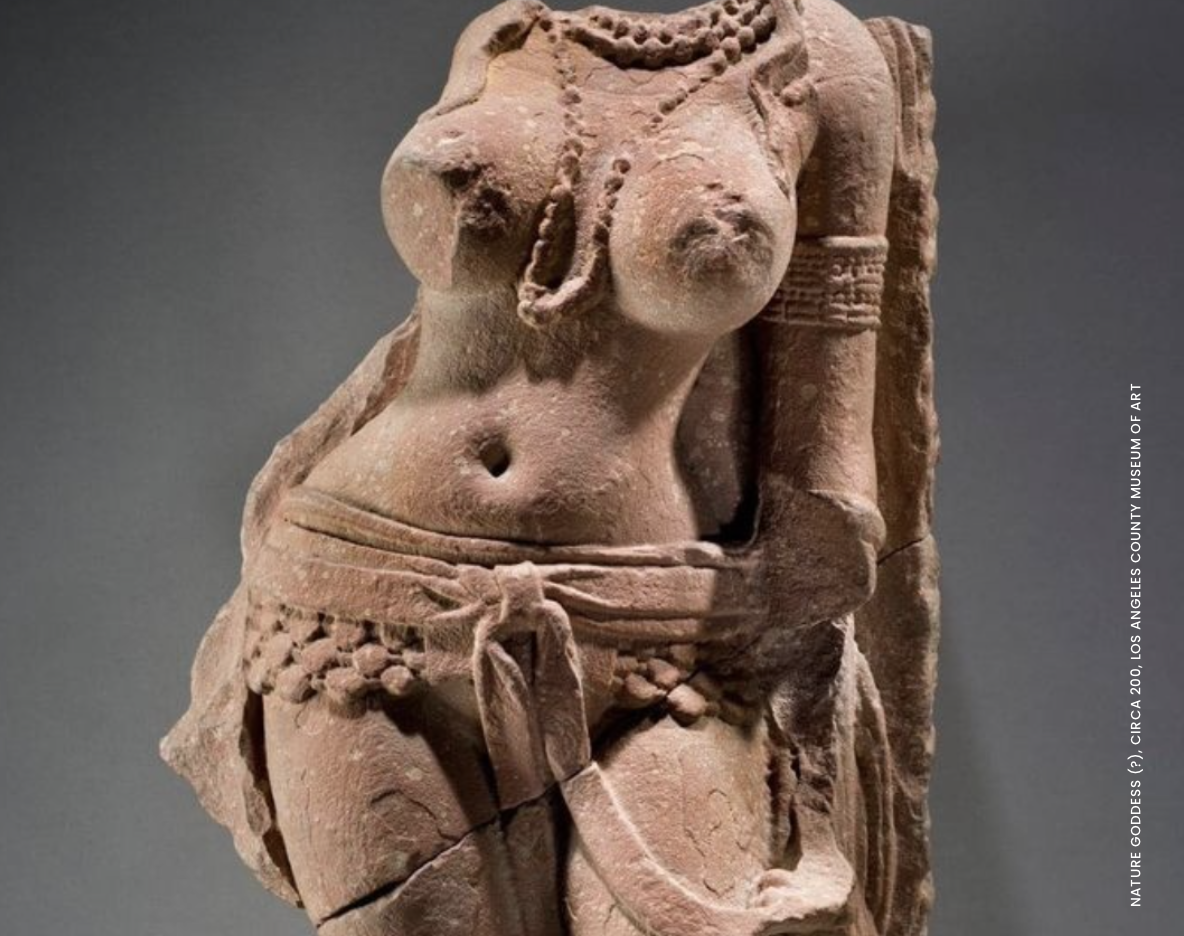
There is a force that moves through all of life.
You have felt it without knowing its name. You felt it standing at the edge of the ocean watching the waves rise and fall in a rhythm so ancient and so steady that something inside you exhaled without being asked. You felt it in the way spring arrives after a winter that felt like it would never end, the way green things push through frozen ground as if they never doubted for a moment that they would return. You felt it in the pull of the moon, the way she swells and recedes in a cycle so perfectly timed that it mirrors the rhythm of your own body, your own blood, your own emotional tides.
This force turns seeds into forests. It fills the womb of the earth with life in the same way it once began filling yours. It is creative, cyclical, wildly intelligent, and it is feminine in its nature.
Every culture throughout human history has had a name for her.
What is Shakti
In the ancient Vedic wisdom of India, this force is called Shakti. The ancient Egyptians called her Isis, goddess of magic, healing, and resurrection. The Greeks knew her as Gaia, the living earth herself. The Incas called her Pachamama. And in the Celtic tradition of my own Scottish and British ancestry, she was known as Brigid, goddess of healing, creativity, and the sacred flame. She has been painted on cave walls, carved into stone, and sung into being around fires for tens of thousands of years across every culture on earth.
Shakti is not a deity you have to believe in or a religion you have to adopt. She is simply the name the ancient wisdom keepers gave to the animating, creative, cyclical force that underlies all of existence. The pulse of the divine feminine moving through every living thing. Including you.
Here is what Ayurveda has always understood that most of us were never taught: Shakti does not live somewhere outside of you. She is not something to seek or earn or prove yourself worthy of. She lives inside you, in your body, in your breath, in the very center of your pelvic bowl. You were born connected to her. And no loss, however devastating, changes that.
Why Most of Us Were Never Taught About This
Most of us grew up in a world that had largely forgotten Shakti. A world that valued productivity over rhythm, logic over intuition, doing over being. A world that taught us to live from the neck up and treat the body, especially the womb space, as something to be managed rather than listened to. We were never shown how to honor the womb as a center of wisdom, never taught that our intuition, our creativity, our capacity to feel deeply and know things without being able to explain them, all of it flows from the same feminine source that has always lived inside us.
And then pregnancy loss happens. And the disconnection that was already present becomes something else entirely.
There is something that happens after pregnancy loss that almost nobody talks about. Something that goes deeper than the grief, deeper than the physical recovery, deeper than the complicated feelings about trying again or not trying again or not knowing what you want at all. You start to feel like a stranger in your own body. Not just uncomfortable. Not just sad. A stranger. Like the body you have lived in your entire life has become a place you no longer quite recognize, a place associated with loss rather than life, a place you would rather float above than actually inhabit. And the part of your body that feels most foreign, most complicated, most difficult to look at or touch or even acknowledge, is your womb.
If that resonates, I want to say something to you before we go any further.
Your womb is not broken. She is grieving. And there is a profound difference between the two.
The disconnection you feel from your womb after loss is not evidence that something is permanently wrong. It is evidence that something real and significant happened there. That this space held life and love and hope and then was asked to release all of it. That is not failure. That is one of the most profound things a human body can do. And the path back to your womb, back to Shakti, back to the feminine wisdom that has always lived inside you, begins not with fixing anything but with simply being willing to return.
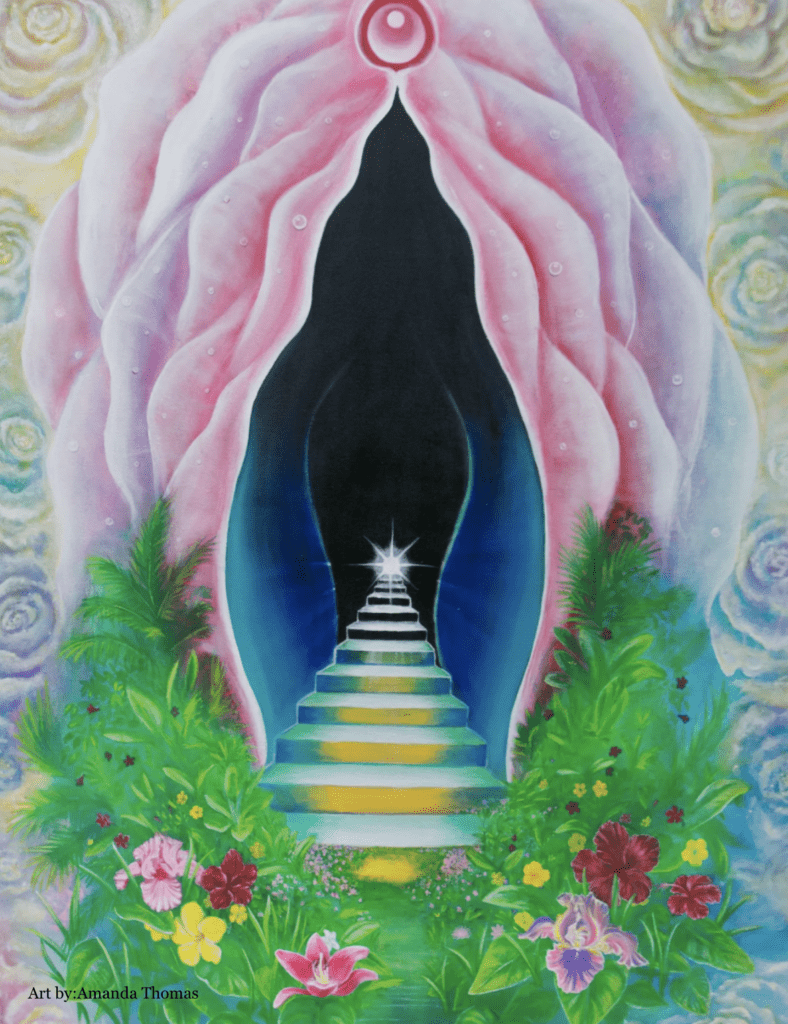
Shakti and the Womb
In Ayurveda and the yogic tradition, the womb and the sacral chakra, known as Svadhisthana, are understood as the primary seat of Shakti in the female body. The Sanskrit word for the womb and the entire sacred feminine anatomy is Yoni, which does not translate as reproductive organ. It translates as source. Or origin of life.
This distinction matters enormously. Because when we understand the womb as source rather than simply as a reproductive organ, our entire relationship to it changes. It is no longer something that succeeds or fails. It is the seat of our creative power, our intuitive wisdom, our connection to the cyclical intelligence of nature, and our most direct access point to Shakti herself.
Fertility is one expression of that energy. But it is only one. The Shakti that lives in the womb space births ideas, art, music, relationships, and entirely new versions of self. The creative force alive within the feminine center was never only about making babies. It is the pulse of the entire creative and emotional life of a woman.
And here is what I want you to hear clearly if you are navigating pregnancy loss right now. Shakti does not abandon the womb after a loss. She waits within it. The source does not disappear because the pregnancy did. She is still there, in the center of your pelvic bowl, holding everything you are and everything you are still capable of becoming.

How Pregnancy Loss Can Open a Doorway to Shakti
I want to say this carefully because I know how easily it can land wrong.
I am not saying that pregnancy loss is a gift. I am not saying it happened for a reason or that you should feel grateful for the pain. I do not believe either of those things and I will not say them to you.
What I am saying is something different and something I have experienced in my own body after two ectopic pregnancies and witnessed again and again in the women I work with.
The womb has always been the place where both life and death are held. Both are sacred. Both deserve ceremony. And when loss moves through this sacred space, it can crack open a doorway to a depth of Shakti, a depth of feminine wisdom and self-knowing, that many women say they could not access before. Not because the pain was necessary. But because the opening it created was real.
Pregnancy loss, as devastating as it is, has a way of bringing us into direct contact with the most primal questions of human existence. What is life? What is love? What does it mean to create something? Who am I beyond what I produce or provide or carry? These questions, when we are willing to sit with them, lead us somewhere true. They lead us inward. And inward is exactly where Shakti lives.
Many women who have moved through pregnancy loss describe a spiritual awakening alongside the grief, a sudden and sometimes overwhelming awareness of something larger than themselves, a hunger for meaning and depth and connection that did not exist in the same way before the loss. This is not coincidence. This is Shakti making herself known through the crack that grief created.
You do not have to be ready to receive that yet. You do not have to feel anything other than exactly what you feel right now. But if something in you is leaning toward this, if some part of you senses that this experience is asking something of you beyond survival, consider this an invitation to begin exploring the relationship between your loss and the ancient feminine wisdom that has always lived inside you.
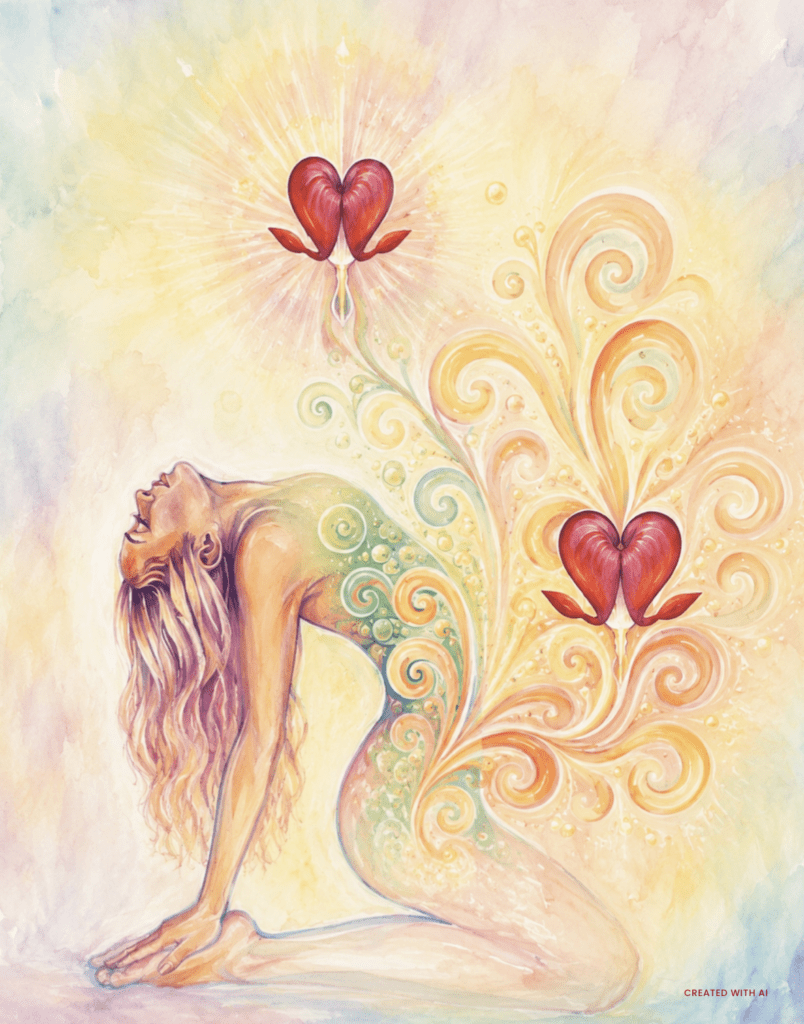
3 Ways to Begin to Connect With Shakti
You do not need a spiritual practice or a meditation background or any prior knowledge of Ayurveda to begin reconnecting with Shakti. You only need a willingness to turn inward and a few minutes of quiet presence.
Sit with your womb. Once a day, place both hands over your lower belly and breathe slowly. Breathe in for a count of four. Breathe out for a count of four. Feel the warmth of your own hands. Notice whatever arises without trying to change it. This simple practice of returning your attention to your womb space is one of the most direct ways to begin reestablishing your connection to Shakti within you.
Spend time in nature. Shakti is most palpable in the natural world. Walk barefoot on the earth. Sit beside water. Watch the moon move through her phases. Let the natural world remind you that you are part of something cyclical and ancient and completely beyond your control, and that this is not terrifying but deeply, deeply comforting.
Create something. The sacral chakra, the seat of Shakti in the body, governs creativity as much as it governs reproduction. Dance, paint, garden, cook with intention, write something no one will ever read. Creating with no end product in mind is one of the most powerful ways to tell Shakti that you are ready to let her move through you again.
Moving Forward With Shakti
Wherever you are in your healing journey, whether you are hoping to try again, still deciding, or beginning to imagine a different path entirely, Shakti meets you there. She does not require a particular outcome or a specific plan. She only asks that you return to yourself. Again and again. In small and consistent and tender ways.
The three practices above are not a program to complete. They are invitations to carve out a few sacred minutes each day where you belong entirely to yourself. Where you are not trying to recover on anyone else’s timeline or meet anyone else’s expectations of what healing should look like. Where you are simply a woman returning, slowly and with great gentleness, to the most ancient and intelligent force that has ever lived inside her.
This is not separate from your healing. This is the center of it.
Shakti was never lost. She was waiting. And every time you place your hands on your womb, every time you step outside and let the moon fall on your face, every time you create something just because it feels alive, you are finding your way back to her and ultimately, back to yourself!
That is enough. You are enough. And she has been here the whole time.




Be the first to comment